
Every esdeinés piece undergoes many hours of manual labor before reaching your hands. It deserves care that lives up to that effort. The good news is that caring for handmade jewelry is not complicated—it only requires knowing a couple of basic rules and applying them regularly. In this guide, we cover the four main esdeinés materials: blown glass, cold porcelain, natural shells, and natural stones.
General rules for all handmade jewelry
Before delving into material-specific care, there are three rules that apply to all esdeinés pieces without exception:
Creams and perfume first, then jewelry. Perfume alcohols and cream oils attack metal plating and can create an opaque layer on any handmade material. Give your skin a few minutes to absorb the products before putting on your necklace. And when you take it off at the end of the day, do so before applying your night cream.
Store each piece separately. Rubbing between jewelry deteriorates finishes, can scratch glass, and chip porcelain. The pouch or box your esdeinés piece arrived in is exactly what you need to store it.
Avoid the bathroom as a jewelry box. The constant humidity in the bathroom environment accelerates the deterioration of metal components, even if you don't directly wet the piece. Store your necklaces in the bedroom.
Care for blown glass jewelry
Blown glass is a durable material but with a surface that deserves respect. Pieces like the Chili & Co Necklace, the Flying Heart Necklace, or the Cactus Necklace have blown glass pendants combined with cultured pearls and glass beads—each material with its own needs.
Can it get wet? The glass itself is not damaged by water. Metal components can be affected over time if they get wet frequently, especially in contact with salt water or chlorine. Showering with the necklace on occasionally is not a problem, but swimming in the sea or pools regularly can deteriorate the plating in the long run. If it gets wet, dry it with a soft cloth before storing it.
How to clean it:
- Dampen a soft microfiber cloth with warm water and a drop of neutral soap.
- Wipe gently in circular motions.
- Rinse with another damp cloth without soap.
- Dry completely before storing.
Always avoid: chemical products, bleach, alcohol, ultrasonics, steam cleaners, and abrasive materials.
Care for cold porcelain jewelry
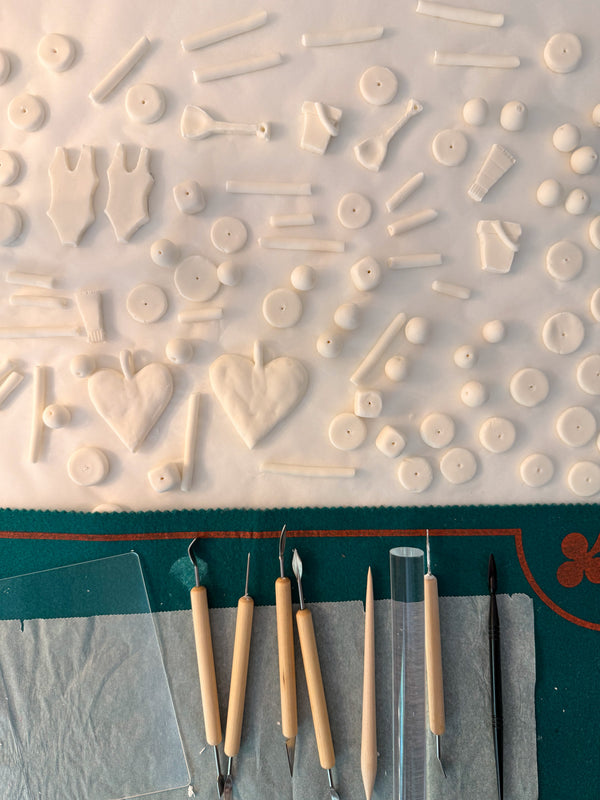
Esdeinés cold porcelain is varnished—this gives it a protective layer that makes the pieces more resistant than they appear. Pieces like the Tomato Necklace, the Gilda Necklace, or the Sardines Necklace perfectly withstand daily use if properly cared for.
Can it get wet? Varnished cold porcelain tolerates occasional contact with water, but it is not designed to get wet frequently. The varnish protects the paint, but prolonged and repeated exposure to water can eventually affect the finish. If it gets wet, dry it immediately with a soft cloth.
How to clean it:
- Use a dry or slightly damp cloth—without soap in most cases.
- If there is accumulated dirt, a minimal drop of neutral soap on a damp cloth is sufficient.
- Dry completely and immediately.
Always avoid: soaking the piece, harsh chemical products, rubbing hard on the painted area, and hitting it against hard surfaces—cold porcelain is resistant but not unbreakable.
Care for natural shell necklaces
Natural shells are the most delicate material in the collection—precisely because they are natural. Pieces like the Big Shell Necklace or the Twin Cauri Necklace have shells that came from the sea as they are—without artificial treatments to harden them.
Can they get wet? Here the answer is clear: avoid wetting shell necklaces whenever possible. Saltwater and chlorine can alter the color and texture of the shell over time. If they get wet, dry them immediately with a soft cloth and let them air out before storing them.
How to clean them:
- Use a dry, soft cloth to remove dust or superficial dirt.
- If they need deeper cleaning, a slightly damp cloth—without soap—and immediate drying.
- Never submerge them in water.
Extra care with storage: Natural shells can lose their shine over time if stored in very dry environments. Storing them in their original pouch helps maintain adequate ambient humidity.
Care for natural stones
Some esdeinés pieces incorporate natural stones—pink chalcedony, amethyst, river stone—which have their own peculiarities. The Maxi Pink Necklace, made with natural pink chalcedony, or the Spiral Shell Necklace, which combines shells with chalcedony and amethyst, are examples of pieces that deserve specific care.
Can they get wet? Most natural stones tolerate water well, but prolonged contact with chlorides or acids can alter their surface over time. For these pieces, the same general rule applies: take them off to bathe and dry them if they get wet.
Light and heat: Colored stones like pink chalcedony or amethyst can lose color intensity with very prolonged sun exposure. Do not leave them in direct sunlight for hours—on the nightstand or windowsill is fine, but not as permanent decoration in a sunny window.
How to clean them: Slightly damp soft cloth, no chemical products. To restore the natural shine of the stone, gently rub them with a dry microfiber cloth after cleaning.
Care for the palm cap
The Palm Cap with Shells deserves a separate mention because it is a natural palm accessory with hand-sewn shells—two natural materials in one.
Natural palm is sensitive to excessive humidity: it can deform if it gets very wet or if it is stored damp. Avoid using it on days of heavy rain or if you are going to get your head wet. If it collects some dust or dirt, a soft, dry brush is all you need. The sewn shells are cared for like the rest of the shells in the collection: no chemical products, no direct water.
Store it in a place with some space—not crushed under other things—so it maintains its shape. The original box is the best option.
Closures and metal components
All esdeinés closures are made of 18k gold-plated stainless steel—one of the most durable materials for jewelry. It does not rust, does not cause allergies, and maintains its finish with normal use. However, over time and with friction, the plating may darken slightly in areas of greater contact.
To restore the shine: a soft cloth specifically for metals, gently applied to the darkened area, is sufficient. No chemical products, no rubbing hard.
Quick summary: what to remember
- Perfume and creams first, then jewelry.
- Store each piece separately in its pouch or box.
- Do not store jewelry in the bathroom.
- If they get wet, dry them immediately.
- No chemical products, alcohol, or abrasive materials.
- Natural shells are the most delicate—maximum care with water.
- Colored stones avoid prolonged direct sun.
- The palm cap should be stored with space, not crushed.
With these basic rules, your esdeinés pieces should remain in perfect condition for years. If you have a specific question about a piece, write to me via the contact page—I'd be happy to help.
Are you interested in learning about the process behind our porcelain pieces? Discover everything about esdeinés handmade cold porcelain jewelry.
And do you already have your pieces but don't know how to combine them? Read our guide on how to combine your handmade necklaces for every occasion.